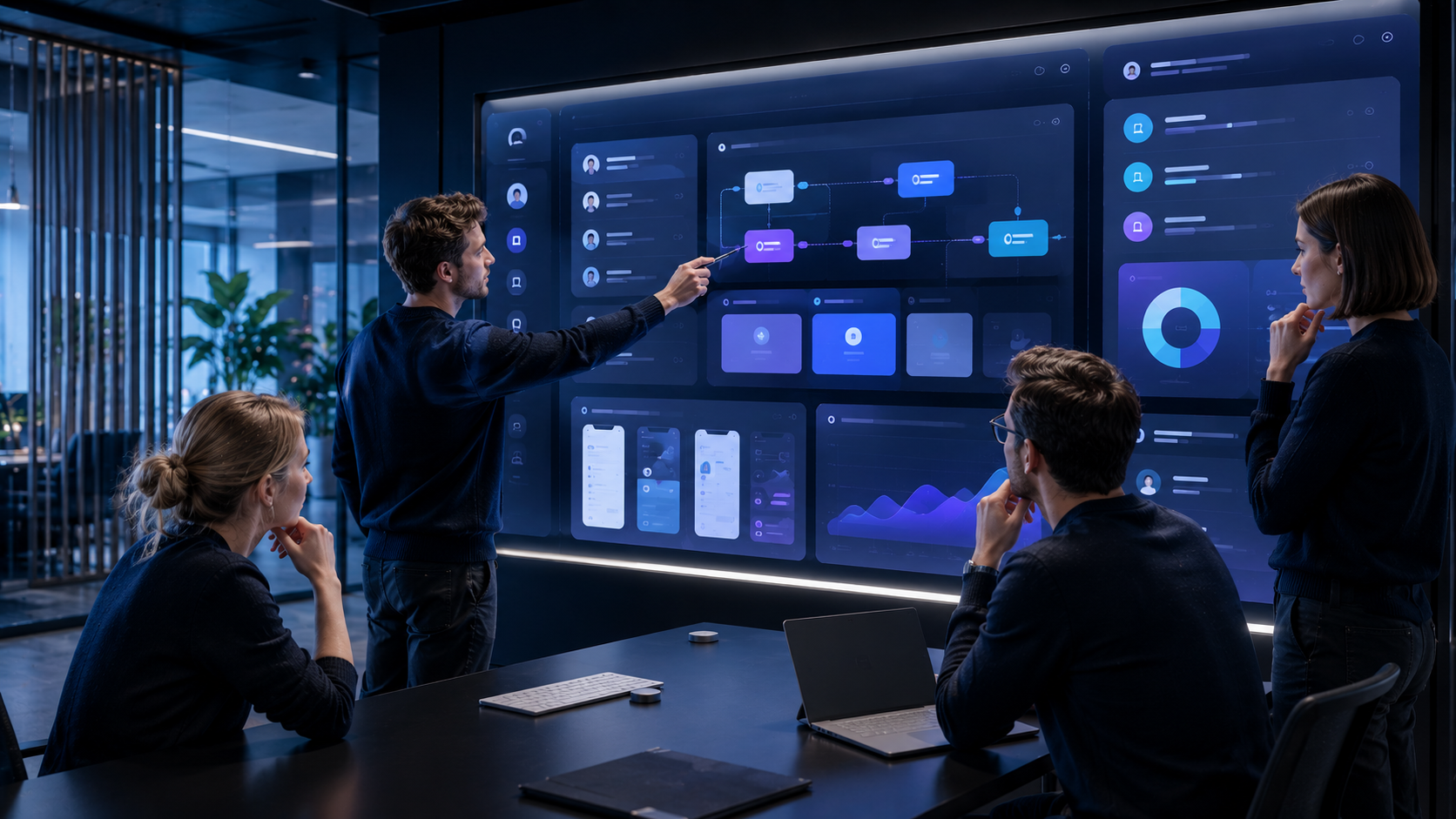
User interfaces and app content
We translate interface strings, menus, notifications, onboarding flows, and in-app guidance.
Software, SaaS, cybersecurity, cloud, enterprise systems, and technical documentation.
IT translation requires accuracy, technical understanding, and consistency across interfaces, documentation, support content, and product materials. A software string, API guide, cybersecurity policy, hardware manual, and CRM training module each require a different approach to terminology, format, and review.
At PangeaVox Translation, we support IT, software, hardware and technology companies with translation and related language services for technical, digital, corporate, and user-facing content.
For written IT and technology documents, clients can also review our Translation Services.
Software, technical, support, and product content for digital platforms and technology teams.
We translate interface strings, menus, notifications, onboarding flows, and in-app guidance.
We translate product specifications, system documentation, implementation guides, and technical reports.
We translate support articles, FAQs, troubleshooting content, and self-service guidance.
We translate release notes, update messages, deployment information, and change documentation.
We translate product pages, presentations, sales materials, campaigns, and customer communication.
We translate API references, SDK guides, integration instructions, configuration notes, developer portal content, and many more
Software and SaaS content often contains short strings, interface labels, menus, buttons, error messages, onboarding flows, system notifications, admin panels, dashboards, and help content. These elements must be translated with context in mind.
Software localisation requires attention to placeholders, variables, character limits, UI constraints, tone, consistency, and user flow. A literal translation may be too long, unclear, or unsuitable for the interface.
We support localisation of software interfaces, SaaS platforms, dashboards, admin panels, web applications, onboarding flows, release notes, and help content.
For software, apps, websites and digital market adaptation, clients can also review our Software Localisation service.
Best suited for:
SaaS platforms, web applications, dashboards, admin panels, UI strings, menus, buttons, system messages, onboarding flows, and help content.
To help us provide the best possible service, please share the following information:
String files, screenshots, source and target language, target market, platform details, character limits, placeholders, glossary, style guide, and access to context or a test environment where available.
Technical documentation must be clear, accurate, and consistent. Users, administrators, support teams and technical specialists rely on these materials to install, configure, operate, troubleshoot, or maintain a product or system.
We support translation of user guides, administrator guides, installation manuals, configuration instructions, release notes, support articles, knowledge bases, FAQs, technical specifications, and product documentation.
The translation must preserve terminology, sequence, warnings, commands, version references, product names, and procedural logic.
Best suited for:
User guides, administrator manuals, installation guides, configuration instructions, release notes, support articles, knowledge bases, FAQs, and technical specifications.
To help us provide the best possible service, please share the following information:
Document type, product or system context, source and target language, target audience, terminology requirements, reference materials, file format, required workflow, and deadline.
Cybersecurity and data protection content requires precise terminology and careful handling of risk-related language. These materials may be read by technical teams, employees, clients, auditors, legal teams, or regulators.
We support translation of security policies, awareness training, incident response materials, privacy-related documentation, compliance content, product security materials, technical advisories, and internal procedures.
The language should be clear, consistent, and appropriate for the audience. A cybersecurity awareness module for employees requires a different tone from an incident response procedure or product security white paper.
Best suited for:
Security policies, cybersecurity awareness training, incident response materials, data protection documents, privacy-related content, compliance materials, and product security documentation.
To help us provide the best possible service, please share the following information:
Document type, target audience, source and target language, subject area, terminology requirements, confidentiality requirements, reference materials, and deadline.
Cloud, infrastructure and developer documentation often includes technical concepts, commands, code-related references, configuration steps, API terminology, and system architecture. These materials require strong consistency and attention to detail.
We support translation of API documentation, integration guides, developer guides, cloud service documentation, DevOps materials, infrastructure content, system architecture documents, and technical specifications.
For developer-facing content, it is important to preserve commands, parameters, code snippets, placeholders, endpoint names, product names, and formatting exactly where required.
Best suited for:
API documentation, integration guides, developer guides, cloud service materials, DevOps documentation, infrastructure content, architecture documents, and technical specifications.
To help us provide the best possible service, please share the following information:
Documentation type, platform or product context, source and target language, target audience, terminology requirements, code or command handling instructions, reference materials, and deadline.
Enterprise systems combine business processes with technical terminology. CRM, ERP, SAP, and other internal platforms may include interface strings, workflows, training materials, administrator content, user guides, reports, and support documentation.
Translation for enterprise systems must preserve workflow logic, role names, field labels, process terminology, and company-specific language. Consistency is especially important when several departments or user groups rely on the same system.
We support translation and localisation of enterprise platform content, CRM and ERP materials, internal system documentation, training guides, workflow instructions, and support content.
Best suited for:
CRM materials, ERP documentation, SAP-related content, enterprise platforms, admin interfaces, internal workflows, training materials, and user support documentation.
To help us provide the best possible service, please share the following information:
System type, document type, source and target language, target users, terminology requirements, screenshots, string files or reference materials, and deadline.
Hardware and product documentation often includes specifications, safety information, installation steps, component names, technical descriptions, diagrams, and product sheets. Accuracy and consistency are essential.
We support translation of hardware manuals, device documentation, product specifications, safety information, installation guides, maintenance instructions, product sheets, and technical marketing materials.
Where layout, diagrams, labels, or tables are important, the translation may need desktop publishing or final formatting checks before delivery.
Best suited for:
Hardware manuals, device documentation, specifications, safety information, installation instructions, maintenance guides, product sheets, and technical marketing materials.
To help us provide the best possible service, please share the following information:
Product type, document type, source and target language, intended use, terminology requirements, reference materials, file format, and formatting requirements.
Some IT and technical projects involve large volumes of structured, repetitive, or regularly updated content. In suitable cases, machine translation post-editing may help manage volume, time, and budget while keeping human review in the workflow.
MTPE is not suitable for every IT document. It may be appropriate for structured support content, knowledge base articles, internal documentation, or repetitive technical materials where the expected quality level is clearly defined. High-risk, legal, security-critical, or highly visible content may require a fuller human translation and review workflow.
For machine-translated technical content that requires human review, clients can also review our MTPE service.
Best suited for:
High-volume support content, knowledge base articles, repetitive technical documentation, internal IT materials and structured product content.
To help us provide the best possible service, please share the following information:
Source files, machine translation output if available, content type, expected quality level, terminology requirements, risk level, deadline, and whether publication-level review is required.
IT and technical materials often include screenshots, tables, diagrams, numbered procedures, interface labels, commands, charts, and PDF layouts. After translation, these elements may need checking to ensure the final file remains readable and usable.
Desktop publishing can help preserve document structure, tables, headings, screenshots, captions, page flow, numbering, and final PDF output. This is especially useful for manuals, reports, product sheets, training materials, and publication-ready files.
For translated IT materials that need layout adaptation, clients can also review our Desktop Publishing service.
Best suited for:
Technical manuals, product sheets, training materials, PDF documents, reports, presentations, diagrams, tables, and publication-ready technical files.
To help us provide the best possible service, please share the following information:
Editable source files, reference PDF, target language, final delivery format, screenshots, layout requirements, brand guidelines if available, and deadline.
Quality control for IT translation requires attention to terminology, completeness, numbers, product names, placeholders, variables, tags, commands, file names, UI labels, screenshots, links, formatting, and consistency across files.
Technical terminology must remain consistent across software interfaces, documentation, support content, training materials, and product communication. For recurring projects, approved terminology, and preferred wording can be maintained across updates and releases.
Depending on the project, the workflow may include translation, revision, terminology checks, localisation QA, MTPE review, layout checks, and final quality control. For more information about our broader quality process, clients can review our Quality Assurance page.
Best suited for:
Software, SaaS, cybersecurity, cloud, enterprise systems, hardware, technical documentation, and recurring IT projects.
To help us provide the best possible service, please share the following information:
Glossary, style guide, previous translations, product terminology, UI screenshots, placeholder instructions, quality expectations, and any client-specific requirements.
IT projects may require more than standard written translation. Depending on the file type, platform, and final use, related services may help prepare the content for release, publication, user support or multilingual delivery.
For software, apps, websites and interfaces, Software Localisation may be required. For high-volume technical content, MTPE may be suitable when human review is included and the expected quality level is clearly defined. For technical PDFs, manuals, reports and presentations, Desktop Publishing can help preserve the final layout. For training videos, webinars, demos or e-learning content, Multimedia Localisation may be relevant.
To help us provide the best possible service, please share the following information:
Source language and target language
Type of IT or technical content
Source files and reference materials
Product, platform, or system context
Target audience
Intended use of the translation
Deadline
Required workflow, if known
Terminology requirements
Glossary, style guide, or previous translations
Screenshots, string files, or test environment access, where available
Placeholder, tag, command, or code handling instructions
Formatting, desktop publishing, localisation, or multimedia requirements
Confidentiality or delivery requirements
Any client-specific instructions
If you are not sure which workflow is right for your project, you can send the files through the Request a Quote page.
Send us your files, language pair, subject area, platform context, terminology references, and deadline. We will recommend the right workflow for technical accuracy, usability, and user-facing clarity.
Need help? Start a conversation: